Should Arizona Sellers Still Offer Buyer Agent Compensation in 2026?
The NAR settlement removed buyer-agent compensation from the MLS. Here's a clear-eyed look at whether Arizona sellers should still offer it — and how to decide.
Since August 2024, offers of compensation to buyer's agents can no longer appear on the MLS. That change — part of the nationwide NAR settlement — left many Arizona sellers asking the same question: Do I still need to offer anything to the buyer's agent?
The short answer is no. You are not required to. But whether you should is a strategic decision that depends on your price point, location, competition, and how quickly you want to sell.
Here's a clear-eyed look at how buyer-agent compensation works in Arizona right now, and how to decide what makes sense for your sale.
What Actually Changed
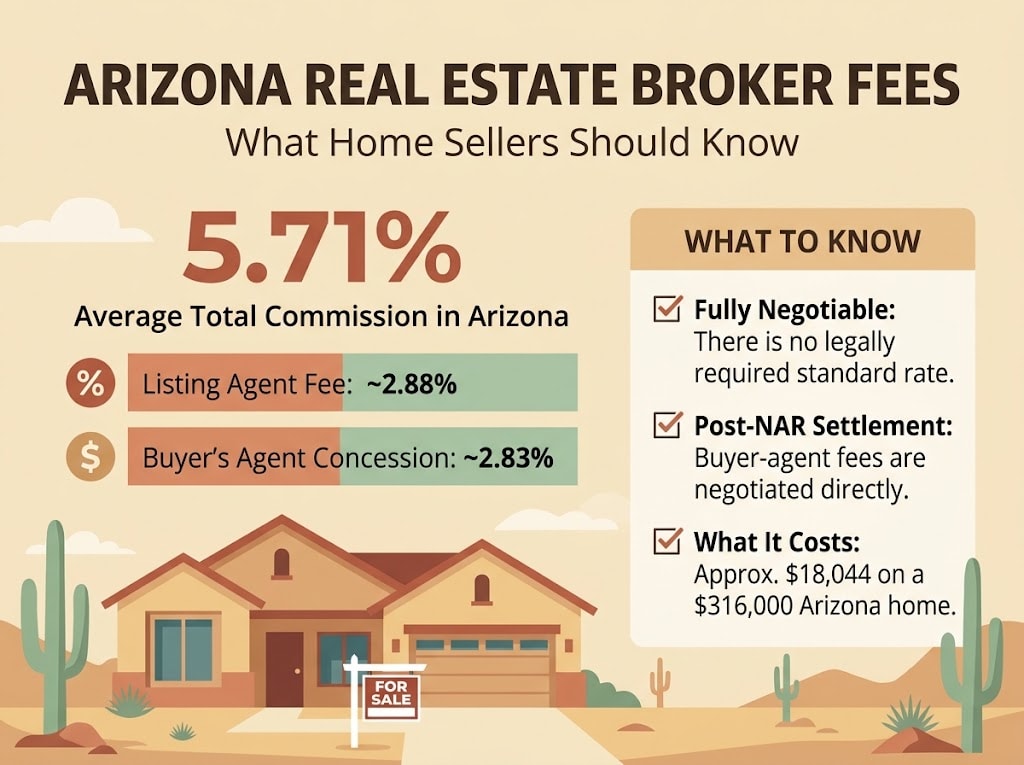
Before the settlement, most listing agents advertised a cooperative compensation amount (often 2.5–3%) directly on the MLS. Buyer's agents could see it immediately and knew they would be paid if their client bought the home.
That field is gone. Compensation is now handled off-MLS — usually negotiated in the purchase contract or via a separate addendum. Buyers must also sign a written buyer-broker agreement that states their agent's compensation before touring homes.
The result: sellers have more control, but buyers' agents still need to get paid somehow. In practice, many sellers continue to offer compensation because it removes friction and keeps their home competitive.
Why Many Arizona Sellers Still Offer It
Even in a higher-inventory market, most buyers still use agents. Those agents are more likely to show homes where they know they will be compensated. Homes that offer nothing can end up with fewer showings, especially in competitive price ranges or neighborhoods where similar properties are offering 2–2.5%.
Offering compensation can also:
- Attract more qualified, agent-represented buyers
- Reduce the chance of last-minute requests for seller concessions to cover the buyer's agent fee
- Help your home feel "standard" to agents who are screening listings for their clients
In short, it is often a marketing tool as much as a cost.
How Much Are Sellers Offering in 2026?
There is no single number. Ranges we commonly see in the Phoenix metro and surrounding areas:
- Entry-level and mid-market homes ($350K–$600K): Many sellers still offer 2–2.5%
- Move-up and higher-end homes: More variation — some offer 2%, others negotiate case-by-case or start lower
- Luxury and unique properties: Sometimes lower or structured differently
Some sellers offer a fixed dollar amount instead of a percentage. Others offer nothing upfront and wait to see what buyers request in their offers.
The key is that whatever you decide should be intentional, not automatic.
How This Works with a Flat Fee MLS Listing
This is where the structure of your listing agreement matters.
With a traditional 2.5–3% listing commission, the seller was already paying a large fee on their side. Adding buyer-agent compensation on top made the total cost very high.
With Dash List, your listing-side cost is fixed and low: $59 upfront + 0.5% at closing. That means any buyer-agent compensation you choose to offer is the only significant variable commission expense you control.
Example on a $500,000 Home
| Scenario | Listing Side | Buyer Agent Comp | Total Commission Cost | Your Savings vs Traditional 3% Listing |
|---|---|---|---|---|
| Traditional 3% listing + 2.5% buyer | $15,000 | $12,500 | $27,500 | — |
| Dash List + 2.5% buyer | $2,559 | $12,500 | $15,059 | $12,441 |
| Dash List + 2% buyer | $2,559 | $10,000 | $12,559 | $14,941 |
| Dash List + $0 buyer | $2,559 | $0 | $2,559 | $24,941 |
You keep the flexibility. You can start with a competitive offer, lower it later, or negotiate it as part of the purchase contract.
Practical Decision Framework for Sellers
Ask yourself these questions before you decide:
How competitive is my specific neighborhood and price range right now? Higher inventory or longer days-on-market usually favors offering something competitive.
Am I priced at the market or above it? A well-priced home can sometimes attract interest even with lower (or no) buyer-agent compensation. An overpriced home almost always needs every advantage.
How important is speed versus maximum net proceeds? Offering compensation often shortens the timeline. Offering nothing can maximize net if the right buyer appears, but it can also mean more days on market.
What are competing listings doing? Check recent sales and active competition in your area. If most similar homes are offering 2–2.5%, going to zero puts you at a disadvantage with agent-driven buyers.
Many sellers land on a middle path: offer a reasonable amount (often 2%) and remain open to adjusting during negotiations.
How to Handle It in Practice
- Decide your approach before you list and discuss it with your broker.
- You can communicate your compensation offer through your broker or in response to inquiries — it just cannot be published on the MLS.
- When an offer comes in that requests seller-paid buyer-agent compensation, treat it like any other term (price, inspection period, closing date, etc.). You can accept, counter, or decline.
- Document everything clearly in the purchase contract or addendum.
How This Connects to Your Total Selling Costs
Understanding buyer-agent compensation is just one piece of your net proceeds picture. For a full breakdown of what it costs to sell a home in Arizona — including title fees, escrow, transfer taxes, and more — see our complete guide to Arizona seller closing costs.
If you're comparing flat-fee MLS options, our best flat-fee MLS Arizona guide walks through what to look for and how Dash List compares.
And if you're still deciding whether to list now or wait, our cost-to-sell breakdown shows exactly how the numbers work at different price points.
Bottom Line
You are no longer required to offer buyer-agent compensation. That is a real change that gives sellers more control. But in most Arizona markets in late 2026, offering a competitive amount remains a practical way to maximize showings and keep your home in front of the largest pool of ready buyers.
The good news if you list with a flat-fee service: your listing-side cost stays low and predictable. That leaves you free to decide how much (if any) buyer-agent compensation makes sense for your specific situation — instead of starting from a high traditional commission baseline.
Ready to see exactly what your net proceeds could look like? Get your free comparative market analysis and listing plan or call/text us at (602) 881-8674.
Thomas Mastromatto, Arizona Broker License #BR104207000. Mountain Lake Realty — Dash List.
Explore Topics
Written by
Thomas Mastromatto
Content creator and writer sharing insights and stories.