Phoenix Arizona Real Estate: Complete Buyer & Seller Guide 2026
Phoenix is one of the Southwest's largest housing markets — but it is not one single market. Here is what buyers and sellers need to know in 2026.
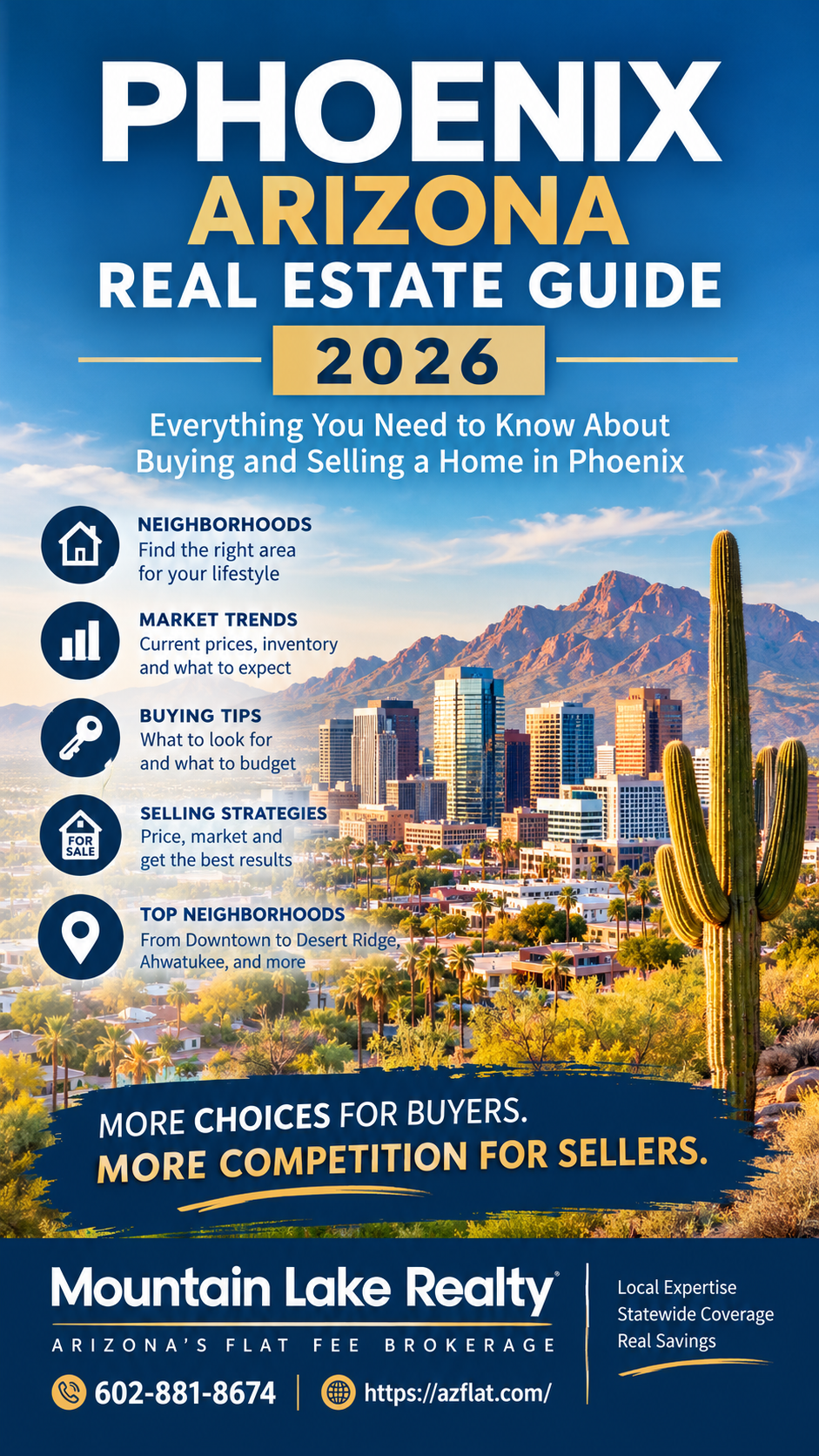
Phoenix, Arizona real estate is one of the largest and most diverse housing markets in the Southwest. From downtown Phoenix and Arcadia to North Phoenix, Desert Ridge, Ahwatukee, and South Mountain, buyers can find everything from condos and townhomes to large single-family homes.
But Phoenix is not one single real estate market.
Home prices, neighborhoods, schools, commute times, property types, and buyer demand can vary dramatically from one part of the city to another. Here is what buyers and sellers should know about Phoenix real estate in 2026.
Phoenix Real Estate Market in 2026
The Phoenix housing market has changed significantly from the extremely competitive market of several years ago.
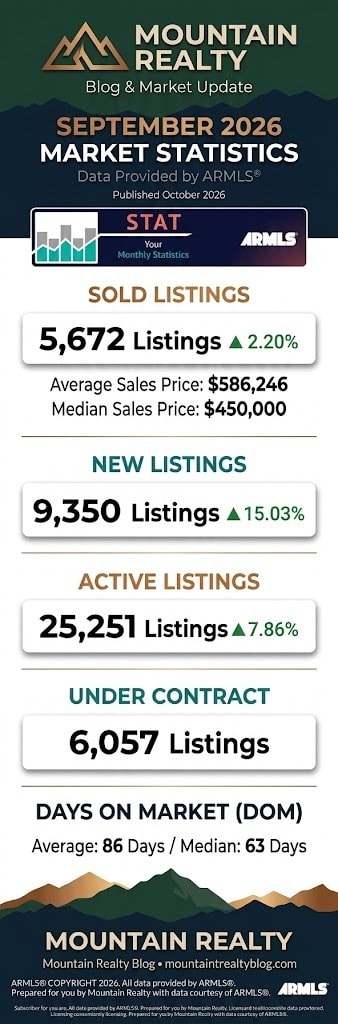
As of September 2026, Realtor.com reported a median Phoenix listing price of approximately $475,000 — down 4.8% from a year earlier. Active listings had increased 7.5% year over year to approximately 18,437 homes, giving buyers considerably more choices. Homes were spending a median of about 62 days on the market.
Zillow's Phoenix data through August 2026 showed a typical home value of approximately $405,689, down 1.5% over the previous year, with a median sale price of approximately $420,000.
The takeaway for buyers and sellers is straightforward:
Phoenix buyers have more choices. Sellers need to price and market their homes carefully. A home that is overpriced can sit while competing properties attract the buyers.
What Does a Home Cost in Phoenix?
There is no single price that accurately describes the entire Phoenix market. Phoenix covers a huge geographic area, and home prices vary substantially by neighborhood.
| Phoenix Area | Approximate Median Listing Price |
|---|---|
| Maryvale | ~$350,000 |
| West Phoenix | ~$357,000 |
| North Mountain | ~$389,000 |
| South Mountain | ~$409,000 |
| Deer Valley | ~$449,000 |
| South Phoenix | ~$459,000 |
| North Phoenix | ~$509,000 |
| Paradise Valley Village | ~$639,000 |
| Camelback East | ~$644,000 |
| Desert View | ~$745,000 |
These are neighborhood-level figures. Individual properties can sell for substantially more or less depending on location, condition, size, lot, upgrades, and other factors. That is why buyers should look beyond the Phoenix-wide median when evaluating a specific property.
Phoenix Neighborhoods
Downtown Phoenix
Downtown Phoenix offers a more urban lifestyle with restaurants, entertainment, sporting events, cultural attractions, and employment centers nearby. Buyers can find condos, townhomes, and single-family homes, with prices varying considerably by building and neighborhood.
Arcadia
Arcadia is one of Phoenix's best-known established neighborhoods — recognized for mature landscaping, larger lots, distinctive homes, and convenient access to restaurants, shopping, and nearby Scottsdale. Because of its location and desirability, Arcadia generally commands higher prices than many other areas of Phoenix.
North Phoenix
North Phoenix offers a broad range of housing options, from established neighborhoods to newer developments. The area provides access to major roads, shopping, employment centers, and outdoor recreation. It can be particularly attractive to buyers looking for newer homes without paying the prices found in some of the Valley's luxury communities.
Desert Ridge
Desert Ridge is a popular North Phoenix area with newer housing, shopping, restaurants, employment opportunities, and convenient access to major freeways. The area attracts buyers who want a modern suburban environment while remaining within Phoenix city limits.
Deer Valley
Deer Valley is located in North Phoenix and offers a mixture of established neighborhoods, newer developments, and single-family homes. Its location provides convenient access to Interstate 17, Loop 101, and other parts of the Valley.
Ahwatukee
Ahwatukee is located in the southeastern portion of Phoenix, separated from much of the city by South Mountain. The community is known for its suburban neighborhoods, mountain surroundings, and access to outdoor recreation — appealing to buyers looking for a quieter residential environment while remaining within the City of Phoenix.
South Mountain
South Mountain and the surrounding area offer a mixture of established neighborhoods, newer development, and access to one of the Valley's most recognizable natural landmarks. Home prices can vary considerably from one neighborhood to another, making individual property research important.
What Are Phoenix Home Buyers Looking For?
Phoenix buyers in 2026 are looking at more than just the number of bedrooms. Common considerations include:
Updated kitchens and bathrooms — Move-in-ready homes are attractive to buyers who do not want to spend significant money immediately after purchasing.
Energy efficiency — Arizona summers produce substantial utility bills. Buyers pay attention to HVAC systems, windows, insulation, solar equipment, and other energy-related features.
Swimming pools — A pool can be a major attraction in Phoenix, particularly during the summer. Buyers should also factor in maintenance, equipment, insurance, and ongoing operating costs.
Outdoor living — Covered patios, shaded outdoor areas, landscaping, and outdoor kitchens add significant appeal in the Arizona climate.
Garage space — Adequate garage and storage space matters for Phoenix buyers dealing with vehicles, recreational equipment, and household storage.
Location — Proximity to employment, freeways, shopping, restaurants, schools, medical facilities, and recreation remains one of the biggest factors affecting value.
Buying a Home in Phoenix
If you are considering buying Phoenix real estate, start with the location and neighborhood — not just the house.
Ask yourself: Where in Phoenix fits the way I want to live?
Then consider the full cost of ownership:
- Purchase price and monthly payment
- Property taxes
- HOA fees
- Homeowners insurance
- Utility costs
- Pool and landscaping expenses
- Age and condition of the HVAC system
- Roof age
- Solar equipment and any associated financing
- Schools, when applicable
- Commute times and resale potential
Buyers should also compare several properties rather than assuming the asking price represents actual market value. With more inventory available in Phoenix in 2026, buyers may have more opportunities to negotiate than they did during the strongest seller markets.
Selling a Home in Phoenix
Selling a Phoenix home in 2026 requires more than putting a property on the MLS.
The first question should be: What other homes will my buyers compare against mine?
Your competition includes homes with similar price, location, square footage, bedrooms and bathrooms, lot size, pool, garage, updates, HOA, age, and days on market. Your competition is not every house in Phoenix — it is the homes a buyer could realistically purchase instead of yours.
Pricing a Phoenix Home Correctly
Pricing is especially important in a market where buyers have choices.
With Phoenix's median listing price at approximately $475,000 and active inventory up substantially from the previous year, sellers face real competition. Overpricing can cost more than reducing the price early.
When a property sits on the market for weeks or months, buyers start asking: "Why hasn't this house sold?" A later price reduction may not completely eliminate that concern.
The goal is not to have the lowest price. The goal is to have a price that makes buyers want to see the property.
Marketing Matters in Phoenix
Today's Phoenix buyers often see a property online before they ever schedule a showing. That means your listing photos, description, and online presentation matter — a lot.
Professional photography, accurate and compelling descriptions, and broad MLS exposure are baseline requirements in a competitive market. Sellers who cut corners on marketing risk sitting longer and ultimately netting less.
How Flat-Fee MLS Listing Works for Phoenix Sellers
One option Phoenix sellers should understand is flat-fee MLS listing.
With a flat-fee MLS service, your home is listed on the Arizona Regional Multiple Listing Service (ARMLS) — the same MLS used by full-service agents — for a low upfront fee. Your listing feeds to Zillow, Realtor.com, Redfin, and hundreds of other sites automatically.
You handle showings and negotiations directly, and you offer a buyer's agent commission to cooperating brokers. The result: full MLS exposure at a fraction of the traditional cost.
For Phoenix sellers who are comfortable managing their own transaction, flat-fee MLS listing can represent significant savings — while still giving buyers' agents every reason to show the property.
The Bottom Line on Phoenix Real Estate in 2026
Phoenix remains one of the most active real estate markets in the country, but it is a more balanced market than it was a few years ago.
Buyers have more choices and more negotiating room. Sellers need to price accurately, present their homes well, and get maximum MLS exposure to compete effectively.
Whether you are buying or selling in Phoenix, understanding the specific neighborhood, the current competition, and the full cost of the transaction will put you in a much stronger position.
Explore Topics
Written by
Dash List Team at Mountain Lake Realty
Content creator and writer sharing insights and stories.