Are Adjustable-Rate Mortgages a Smart Move for Arizona Buyers?
With mortgage rates near 7%, some Arizona homebuyers are looking at ARMs for lower initial payments. Here is what you need to know before choosing one.
With mortgage rates hovering near 7%, it is no surprise that Arizona homebuyers are looking for ways to reduce their monthly payments. One option getting more attention: the adjustable-rate mortgage, or ARM.
But is an ARM actually a smart move — or a risk you do not need to take? The answer depends on your finances, how long you plan to own the home, and the specific terms of the loan.
What Is an Adjustable-Rate Mortgage?
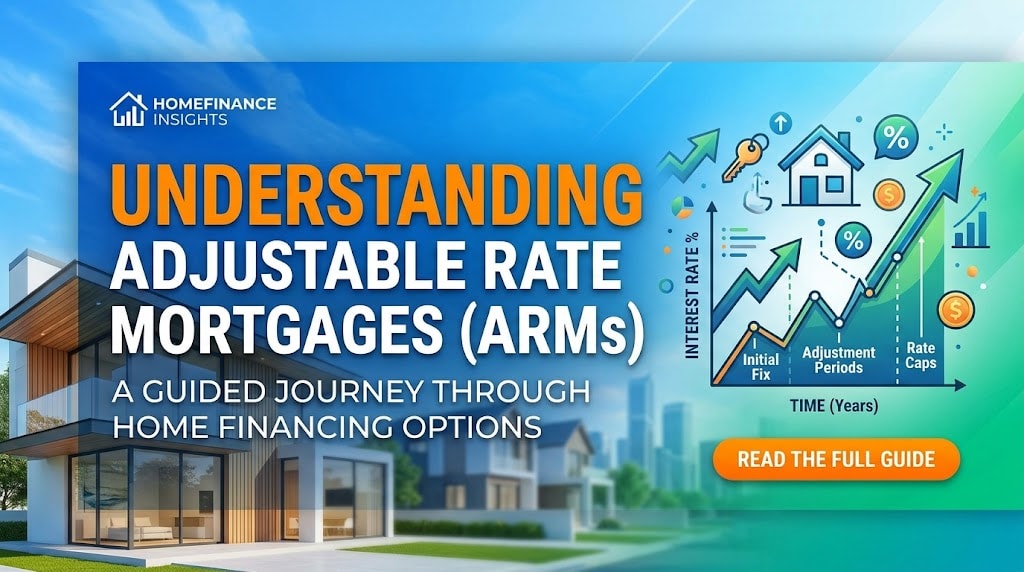
An adjustable-rate mortgage is a home loan with an interest rate that can change after an initial fixed-rate period.
For example, a 5/1 ARM has a fixed interest rate for the first five years. After that, the rate can adjust periodically based on the loan's terms.
Common ARM structures include:
- 3/1 ARM — fixed for 3 years, then adjusts annually
- 5/1 ARM — fixed for 5 years, then adjusts annually
- 7/1 ARM — fixed for 7 years, then adjusts annually
- 10/1 ARM — fixed for 10 years, then adjusts annually
The first number is the length of the initial fixed period. The second number is how often the rate can change afterward.
Why Are Arizona Buyers Considering ARMs Right Now?
The primary reason is monthly payment affordability.
When 30-year fixed rates are near 7%, even a half-point difference in your rate can meaningfully change your monthly principal and interest payment — and your purchasing power.
An ARM's lower initial rate may allow a buyer to:
- Reduce the initial monthly payment
- Qualify for a higher price range
- Preserve cash for repairs, improvements, or reserves
- Purchase now rather than waiting for rates to drop
But the starting payment is only part of the picture.
The Biggest Risk: Your Rate Can Go Up
The most important thing to understand about an ARM is that the initial rate is not permanent.
When the fixed period ends, your rate adjusts based on a market index plus the lender's margin, subject to contractual caps. That means your payment could increase — sometimes significantly.
Before signing, ask your lender:
- What is the initial interest rate?
- How long is the fixed period?
- What index is used for future adjustments?
- What is the lender's margin?
- What are the initial, periodic, and lifetime adjustment caps?
- What is the maximum possible monthly payment?
- Is there a prepayment penalty?
Do not evaluate an ARM based on the starting payment alone. Evaluate it based on what the payment could become.
How Long Do You Plan to Own the Home?
This is one of the most important questions when comparing an ARM to a fixed-rate mortgage.
A buyer who plans to sell before the first adjustment may view the loan very differently from someone planning to stay for 15 or 20 years.
But life does not always follow the original plan. A job change, divorce, family situation, or shift in the housing market can mean you keep the property much longer than expected.
Even if you are considering a 7/1 ARM and expect to sell in five years, you should still understand what happens after year seven — just in case.
Could an ARM Make Sense in Arizona?
Arizona buyers face the same rate environment as buyers everywhere, but local market conditions matter.
Phoenix, Scottsdale, Mesa, Chandler, Gilbert, Glendale, Peoria, Surprise, and other Arizona markets cover a wide range of price points. For some buyers, the difference between a 6% and 7% rate meaningfully affects what they can afford.
That can make alternative financing worth a conversation with your lender.
However, an ARM should always be evaluated on its complete terms — not simply because the starting rate looks attractive.
What If Mortgage Rates Fall?
Some buyers consider an ARM partly because they expect rates to drop and plan to refinance before the first adjustment.
Refinancing is possible — but it should never be treated as a guarantee.
Future rates, home values, your credit profile, income, closing costs, and lending requirements can all affect whether refinancing is actually available or financially beneficial when the time comes.
Buy the home based on what you can comfortably afford today. Do not count on a refinance that may or may not happen.
ARM vs. 30-Year Fixed: Key Questions to Ask
There is no single right answer for every buyer. Here is what to ask your lender before deciding:
- What is my initial interest rate?
- How long is the initial fixed period?
- What could my rate become at the first adjustment?
- What is the maximum possible rate over the life of the loan?
- What is the maximum possible monthly payment?
- How often can the rate change after the fixed period?
- What index and margin determine future adjustments?
- Are there any prepayment penalties?
- What would happen if I kept the home for 10 years?
- How does this ARM compare to a fixed-rate loan at today's rates?
Have the lender run multiple scenarios — including a worst-case rate increase — before you decide.
The Bottom Line for Arizona Homebuyers
With rates near 7%, it is understandable to look for ways to reduce your initial housing costs. An ARM is one option worth discussing with a qualified mortgage professional.
But the lower starting payment comes with real interest-rate risk. The best mortgage is not necessarily the one with the lowest initial payment — it is the loan whose terms fit your finances, your expected time in the property, and your ability to handle future changes.
And remember: the mortgage is only one piece of the cost of homeownership. Factor in property taxes, homeowners insurance, HOA fees, maintenance, and closing costs when evaluating what you can truly afford.
Mortgage rates and loan programs change frequently. This article is for general informational purposes only and is not mortgage or financial advice. Buyers should discuss specific loan terms and qualifications with a licensed mortgage professional.
Frequently Asked Questions
Are adjustable-rate mortgages becoming more popular in Arizona?
Some Arizona buyers are considering ARMs as rates remain elevated because ARMs can offer lower initial rates than comparable fixed-rate mortgages. Availability and pricing vary by lender and borrower.
Is an ARM cheaper than a 30-year fixed mortgage?
An ARM may have a lower initial rate, but that does not mean it will cost less over the life of the loan. The rate can change after the initial fixed period, potentially increasing your total cost significantly.
What is a 5/1 ARM?
A 5/1 ARM has a fixed interest rate for the first five years, followed by annual adjustments based on the loan's terms.
What is the biggest risk of an ARM?
The primary risk is that your interest rate and monthly payment can increase after the initial fixed period ends.
Should Arizona homebuyers avoid ARMs?
Not necessarily. An ARM may be appropriate for some borrowers depending on their financial situation, expected time in the property, and the specific loan terms. A fixed-rate mortgage offers more payment certainty. The right choice depends on your individual circumstances.
Can you refinance an ARM later?
Potentially, yes — if you qualify for a new loan and refinancing makes financial sense at that time. Future rates and lending conditions cannot be guaranteed.
ARM vs. fixed rate: a practical comparison for Arizona buyers
Here is a side-by-side comparison of a 5/1 ARM versus a 30-year fixed rate on a $450,000 home purchase with 20% down ($360,000 loan):
| 5/1 ARM | 30-Year Fixed | |
|---|---|---|
| Initial rate | 5.75% | 7.00% |
| Initial monthly payment | $2,101 | $2,395 |
| Monthly savings (years 1–5) | $294/month | — |
| 5-year total savings | $17,640 | — |
| Rate after year 5 | Unknown (market-dependent) | 7.00% (locked) |
| Risk | Rate may rise | None |
Rates are illustrative. Actual rates vary by lender, credit score, and market conditions.
The ARM saves $294/month in the first five years — $17,640 total. Whether that savings justifies the rate risk after year 5 depends on your specific situation.
When an ARM makes sense for Arizona sellers
ARMs are not just a buyer tool. Arizona sellers should understand ARMs because:
Your buyer may be using an ARM. If your buyer is financing with an ARM, their qualification is based on the initial rate. This can expand the pool of buyers who can afford your home at your asking price.
A rate buydown may be more effective than a price reduction. If you are offering seller concessions, a temporary rate buydown (which functions similarly to an ARM's initial rate benefit) may be more attractive to buyers than a price reduction of the same dollar amount.
Understanding financing helps you evaluate offers. An offer from a buyer using an ARM is not inherently weaker than one from a fixed-rate buyer — both are subject to lender approval. Understanding the financing helps you evaluate the strength of each offer.
The refinance question
Many buyers who take ARMs plan to refinance before the adjustment period begins. Whether that plan works depends on:
- Where rates are in 5–7 years. If rates have fallen, refinancing into a lower fixed rate makes sense. If rates have risen further, refinancing may not improve the situation.
- Whether you still qualify. Your income, credit score, and debt-to-income ratio must still meet lender requirements at the time of refinancing.
- Whether you still own the home. If you plan to sell within 5 years, the ARM's initial rate period may cover your entire ownership period, making the refinance question moot.
- The cost of refinancing. Refinancing typically costs 2–3% of the loan amount in closing costs. That cost must be weighed against the benefit of a lower rate.
The bottom line: an ARM can be a smart financial tool for the right buyer in the right situation. It is not inherently risky or irresponsible — it is a different risk profile than a fixed-rate loan, with different trade-offs.
Ready to list your Arizona home?
Dash List Team offers flat fee MLS listing starting at $59 upfront and 0.5% at closing — full MLS exposure, professional photography, Zillow Showcase, and contract support included.
View pricing and packages · How it works · Get a free consultation
Serving sellers across Phoenix, Scottsdale, Tucson, Mesa, Chandler, Gilbert, and all Arizona cities.
Explore Topics
Written by
Dash List Team at Mountain Lake Realty
Content creator and writer sharing insights and stories.